


What this Article is About
This article describes a first‑hand account of life in Gaza from a family destroyed by war. It shows the ruins of homes, loss of loved ones, and the struggle to care for those still alive amid rubble and pain. The author reflects on deep suffering but also on faith, patience, and meaning in the face of what feels like unbearable hardship. It ties personal tragedy to wider injustice and how the world often turns away. The text says this trial is part of life’s test and calls for resilience, mercy, and belief even in the darkest times.
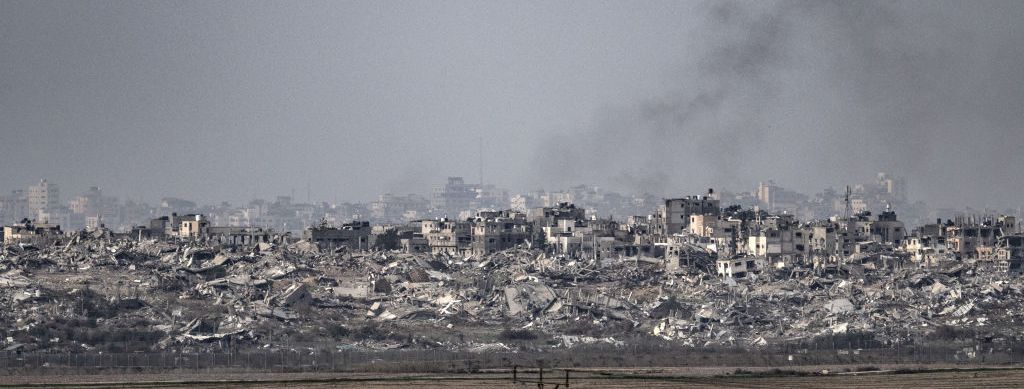
I sit in what remains of our lives, though “life” is too generous a word for what we endure. Around me is a wasteland, a hellscape of rubble and ruin.
The air is thick with the stench of sewage, flooding everywhere from shattered pipes and broken systems. It mingles with the blood-soaked clothes I have no place to wash. Flies swarm incessantly, their hum drowning out the rare moments of silence. The animals have turned feral, cats and dogs wander the streets, scavenging for food, their teeth tearing into the rotting corpses of the dead who once had names, homes, and dreams– fathers, mothers, children, babies, neighbours.
I sit beside my daughter in a makeshift tent, barely shielded from the cold nights and scorching days. Asma was once a radiant light of beauty and innocence, but her face is now a grim reminder of this war, half of it torn away by the shrapnel of a missile that killed her siblings. She cries every night, her broken voice calling out for relief I cannot give. The hospitals that could heal her have been reduced to ash. The corridors that once carried hope are now silent tombs of smoke and debris.
And my son Ibrahim, my dear boy, was alive after the first missile strike, alive despite the rubble crushing his legs. I heard him calling for me. I ran to him, thinking I could save him.
But then the drone came. I saw it. I heard it above us, that awful hum of death by remote control. The bullets pierced his face, his heart, and his body. Killed in an instant by a faceless operator miles away. What was he thinking when he pressed that button? Did he know he was killing a child, or did he even care?
I have begged for my daughter’s evacuation, pleaded for someone to take her to a place where she could be treated. But no one comes. No one answers. The borders are sealed, and the world looks away. I sit with her, holding her tightly as if my embrace could heal her wounds, whispering the only words I have left: Allah ﷻ is with us. Allah ﷻ sees us.
I have lost everything. My husband is gone, his body buried in a plastic bag, in the same makeshift grave as our youngest son, who never learned to say his first words. My other children, my brothers, my friends-all gone. The only thing I have left is my daughter, and even she is a reminder of what this war has taken. Her cries of pain pierce through my soul every night, and yet, when she cries for justice, when she cries for Allah ﷻ, I am reminded why I still breathe.
This life, this torment, this hell-none of it is meaningless. I know why I am here. I know why I must endure.
Allah ﷻ told us this life would be hard. He told us this world would test us. I was never under the illusion that life would be easy, that it would be a paradise of comfort. This life is not paradise. Paradise is elsewhere. Paradise is waiting for my husband, for my children, for those who were torn from me in this brutal genocide. This life is a test. I never thought it would be this hard. And though it is the hardest test I can imagine, I know it has purpose.
When I bury my dead, I remind myself of what Allah ﷻ says:
Everything I have lost belongs to Allah ﷻ. My husband, my children, my home, my peace—they were never truly mine. They were gifts from the Creator, and He has taken them back. It is not for me to question His will, though my human heart aches to understand. My tears do not mean I doubt Him. My screams in the night do not mean I have abandoned Him.
They mean I am human, and that I am in need of His mercy and help. But I do not despair either of His mercy or His help.
My cries are not born of hopelessness but of my humanity. Like you, I am human. Like you, I feel pain. But unlike those who turn away, I know that Allah ﷻ sees my suffering, and He will not abandon me. I seek His mercy in my anguish, for I know it is closer than I can comprehend.
The Betrayal of Mankind
I think of the words of Allah ﷻ :
The nations that have instigated and continued their brutal oppression have failed their test. They have turned away from justice, ignoring the cries of the oppressed while feasting on the spoils of this world. They act as if their power is limitless, as if their wealth will protect them from all harm. But Allah ﷻ sees. He records every injustice, every betrayal, every drop of blood spilled in arrogance and cruelty. Their silence and complicity do not go unnoticed.
The world has become like the oppressors of the past, sitting idly by as believers are burned, crushed, and buried beneath the weight of the oppressor’s atrocities. The nations that turn a blind eye to genocide, that supply the weapons of destruction, that build walls to imprison the oppressed, are no different from those who cast believers into the fire. They will face Allah ﷻ, the Just, and there will be no escape from His reckoning.