
What this Article is About
This article looks at the start of Trump’s return to the White House and the shape of his second term in office. It points out that his team includes advisers known for hard‑line stances toward Muslims and pro‑Israel policies, raising concerns about bias and exclusion. The piece questions whether promises of peace will really address deep conflict or repeat old patterns that ignore root causes and justice. It also warns that political memory may fade, letting power politics return to normal without real accountability. The overall tone suggests that strength alone won’t bring fair outcomes for many affected people.
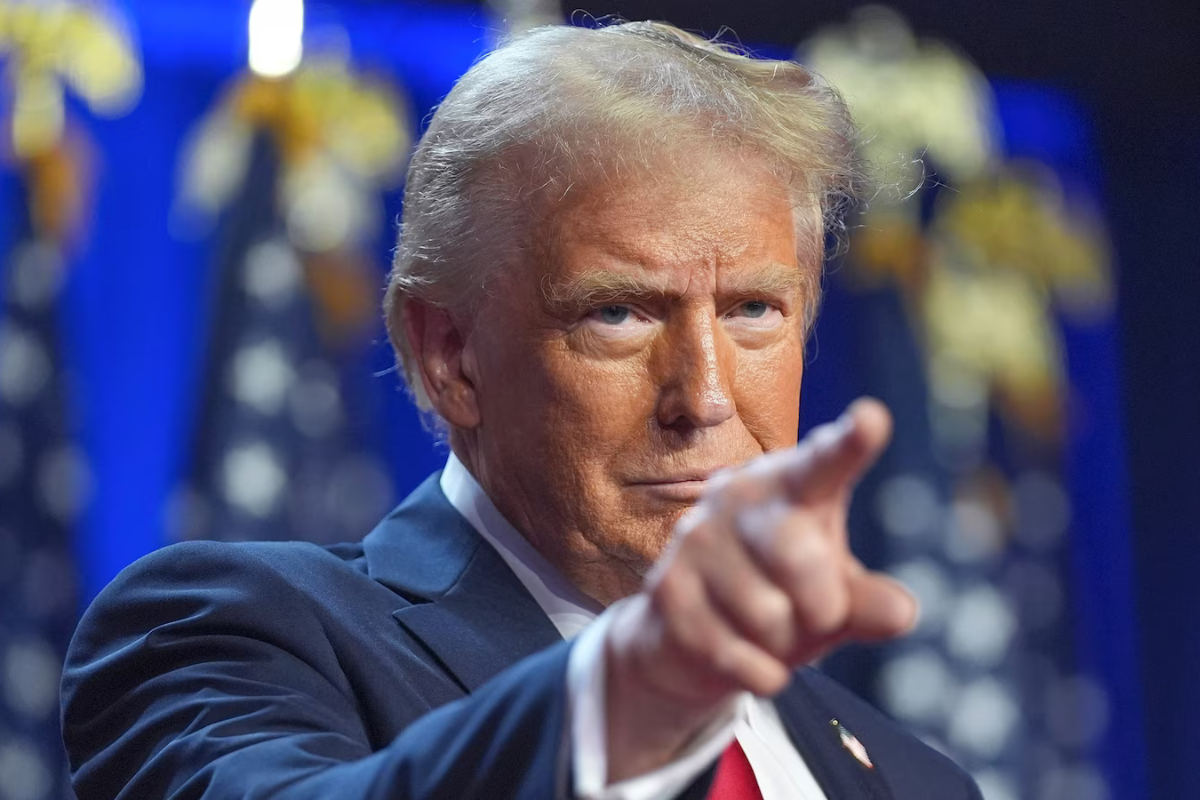
The American political landscape has rarely seen a storm as relentless as Donald J. Trump. Now, with his unprecedented return, President-elect Trump has signaled a drastic shift – one that promises to end the grinding genocide in Gaza, extinguish the fires of Middle Eastern strife, and deliver what he’s called “peace through power.” But amidst these promises, a darker question lingers for the global Muslim community: Will the world simply forget the atrocities of genocide, brushing aside the memory of bloodshed in a return to ‘business as usual’?
A Cabinet Like No Other: Shaping Policy with Adversarial Figures
Trump’s second-term administration is already drawing concern for its makeup – a lineup of figures whose history includes policies and rhetoric that have been deeply adversarial toward Muslims. This Cabinet reads like a reflection of Trump’s vision of a “strength-first” America, prioritizing staunch loyalty, unflinching hard-liners, and pro-Israel advocates.
Mike Huckabee, tapped as U.S. Ambassador to Israel, epitomizes this ethos. Huckabee’s strong evangelical Christian beliefs have fueled his unwavering support for Israel, including its illegal settlements in the West Bank, which he has referred to by their biblical names “Judea and Samaria.” Huckabee has often dismissed the Palestinian cause, arguing that the land belongs solely to Israel based on religious claims. His opposition to ceasefires and calls for Israel to “eradicate” perceived threats underline his hard-line approach. For Muslims, Huckabee’s appointment is particularly alarming, signaling an intensified pro-Israel bias that disregards the ongoing suffering of Palestinians.
Stephen Miller, returning as Deputy Chief of Staff for Policy, brings a long history of crafting anti-Muslim policies. Miller was the chief architect of the infamous Muslim travel ban during Trump’s first term, a move that restricted travel and immigration from several Muslim-majority countries. His presence in Trump’s inner circle ensures that Islamophobic policies could once again take center stage in domestic and international agendas.
Elise Stefanik, nominated as U.S. Ambassador to the United Nations, has little experience in diplomacy but has consistently aligned herself with Israel’s military actions. Her vocal support for the Israeli military’s devastating campaigns in Gaza, including her criticism of the U.N.’s opposition to Israeli policies, signals an administration that will not seek balance in its approach to the Israeli-Palestinian conflict.
Tom Homan, now Border Czar, is tasked with overseeing Trump’s massive deportation program. While his role is focused on immigration, Homan’s history includes defending Trump’s hard-line policies, including family separations. For Muslims and other marginalized groups, his unapologetic stance represents a continuation of policies that dehumanize and marginalize communities.
Peace and Controversy: A New Path for Gaza
Trump has promised to bring an end to the genocide in Gaza, but his approach – rooted in aggressive diplomacy and force – raises significant concerns. His playbook involves bypassing traditional negotiation channels in favor of unilateral action. While this might promise swift results, it also risks exacerbating long-term tensions. For Muslims, this raises the question: Will Trump’s “peace through power” bring justice, or will it impose a settlement that ignores the root causes of the conflict?
Huckabee, as Ambassador to Israel, is set to play a central role in this process. His past statements have dismissed the idea of an occupation, calling Palestinian territories by their biblical names and asserting that Israel has a divine right to the land. This approach not only undermines the possibility of a fair resolution but also reinforces narratives that deny Palestinian rights.
Trump’s administration has hinted at using the Abraham Accords as a model for further normalization between Israel and Arab states. While these agreements have brought economic ties and political benefits, they have often sidelined the Palestinian cause. For Muslims, particularly Palestinians, this risks being another chapter in the erasure of their struggle and identity in favor of geopolitical expediency.
Adversarial Policies and the Global Muslim Community
Beyond Gaza, Trump’s appointees reflect a broader adversarial stance toward Muslims. Stephen Miller’s return signals potential policy revivals that could directly impact Muslim-majority nations and diaspora communities. The Muslim travel ban, which targeted families, students, and professionals from countries like Iran, Yemen, and Syria, was one of Trump’s hallmark policies during his first term. Miller’s role in crafting these discriminatory policies highlights an ongoing willingness to marginalize Muslims in the name of “security.”