

What this Article is About
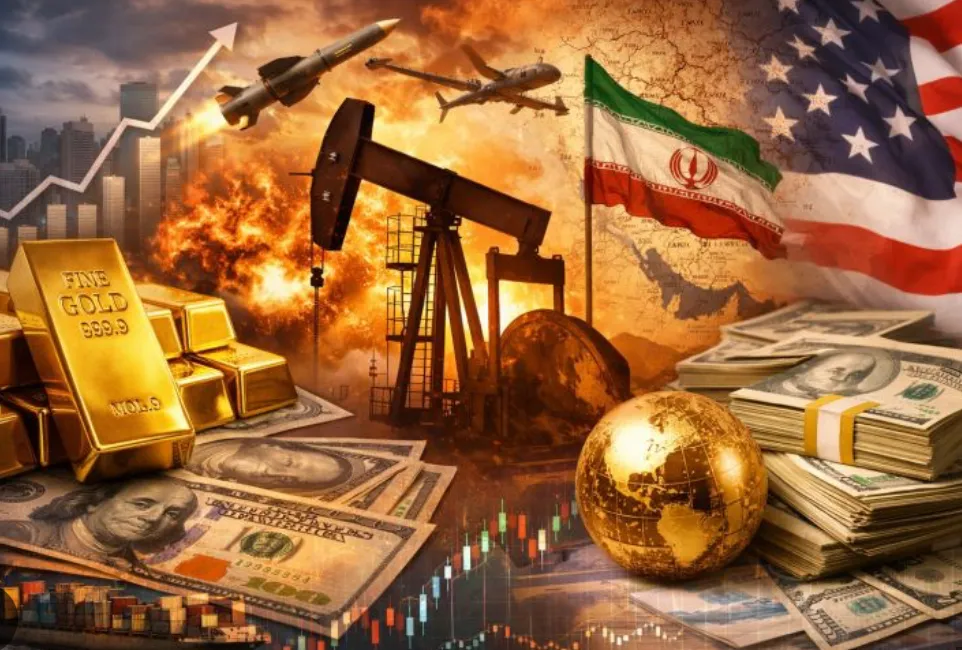
This article presents a critical analysis of how US global power is sustained not just through military strength, but through control over the international monetary system – particularly the petrodollar arrangement that ties the world’s most important commodity (oil) to the US currency. The article argues that conflicts in the Middle East are fundamentally about preserving this financial architecture that allows America to borrow cheaply, fund its massive military, and exercise global influence through economic coercion.
In the past year alone, Israeli Prime Minister Benjamin Netanyahu has made multiple high-profile visits to Washington—meeting the U.S. president, consulting Pentagon officials, and addressing American lawmakers. These journeys reveal something fundamental about power: leaders travel to the capital of the hegemon because that is where decisions are made.
The claim that Israel controls the United States reverses the hierarchy of global politics. Israel depends on American military financing, advanced weapons systems, diplomatic shielding at the United Nations, and strategic coordination with U.S. forces. The United States does not depend on Israel for its reserve currency, global trade settlement system, or worldwide basing network. Power flows from Washington outward.
The current conflict in Iran—marked by direct confrontation, escalating strikes, and threats to maritime chokepoints—must be understood within this same structural frame. It is not merely a regional clash; it is a flashpoint in a much deeper struggle over energy routes, financial leverage, and the durability of the dollar-centred order. When tensions rise in the Strait of Hormuz and oil prices surge, the stakes are not only military but monetary. Disruption in Gulf shipping lanes threatens the very commodity that anchors global dollar demand.
This article argues that U.S. support for Israel, repeated wars across the Middle East, and the sustained American military presence in the Gulf cannot be understood as isolated events or merely reactive policies. They form part of a broader strategic logic that has endured since the 1970s: securing the petrodollar system and maintaining control over the maritime arteries—Hormuz, Bab el-Mandeb, and the Suez corridor—through which the world’s energy flows. When the dollar became fused to oil, the Middle East became fused to American grand strategy. The wars in Iraq, the long occupation of Afghanistan, the intervention in Libya, the pressure on Iran, and the ironclad support for Israel all unfold within this structural context. Energy priced in dollars sustains global demand for the U.S. currency; control of sea lanes secures energy flows; military dominance guarantees both. The Middle East is therefore not a peripheral theatre of American power—it is the keystone that underpins the monetary architecture of U.S. hegemony.
When Gold Collapsed, Oil Became the Anchor
In 1971, President Richard Nixon ended the dollar’s convertibility into gold, bringing the Bretton Woods monetary order to an abrupt close. For a quarter century, the dollar had been anchored to bullion at $35 an ounce, serving as the backbone of postwar stability. Once that link was severed, the world’s reserve currency became fiat—backed not by metal, but by confidence. Inflation surged in the United States, the dollar weakened, and the foundations of global finance appeared uncertain. The question confronting Washington was existential: without gold, what would sustain global demand for the dollar?
The answer emerged not from abstract economic theory but from geopolitical necessity. The 1973 oil embargo imposed by Organization of the Petroleum Exporting Countries demonstrated the raw power of energy markets. Oil prices quadrupled, Western economies slid toward recession, and it became unmistakably clear that oil—not gold—was the indispensable commodity of modern industrial life. Control over oil supply meant leverage over growth, inflation, and political stability. In that moment of vulnerability, Washington recognized an opportunity to anchor its currency to the commodity every nation could not live without.
In 1974, American officials negotiated a decisive arrangement with Saudi Arabia. The agreement was forged within a framework of strategic dependence: Saudi security rested heavily on U.S. military guarantees, weapons transfers, and political support. In return for that protection, Riyadh agreed to price its oil exclusively in dollars and to invest surplus oil revenues into U.S. Treasury securities and American financial institutions. The bargain was straightforward yet transformative. Oil would be sold in dollars, and those dollars would flow back into the United States. Security underwrote settlement; settlement reinforced security.
Because oil is essential to every modern economy, the impact was simple: if you want energy, you need dollars. Countries therefore built up dollar reserves and invested them mainly in U.S. Treasury bonds. Oil exporters earned dollars and recycled them back into American markets. This constant global demand keeps U.S. borrowing costs low and allows Washington to run large deficits without facing the currency crises that hit other heavily indebted nations. Gold once supported the dollar; oil replaced it—and tied America’s currency to the world’s most important commodity.