

Blood, Oil, and What Is Really at Stake
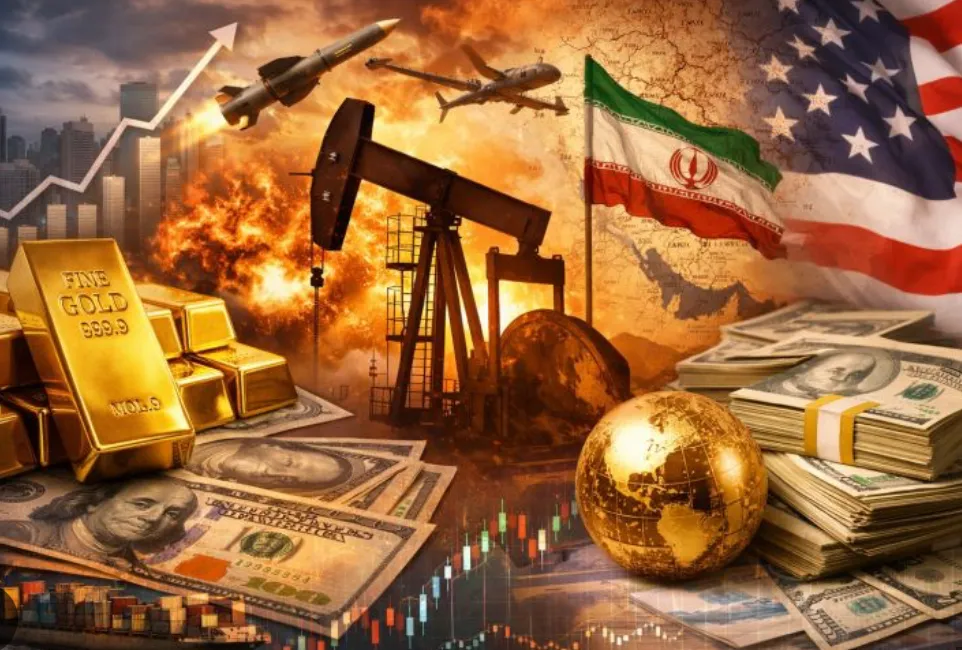
For more than fifty years, the Middle East has been the arena where financial power and military force converge. Iraq, Afghanistan, Libya—each war was framed in a different language, yet each unfolded along the same strategic map: oil fields, sea lanes, and chokepoints that anchor the global energy system. The cost has been staggering—trillions of dollars spent, societies shattered, generations displaced. The region has carried the human burden of a geopolitical order tied to energy and currency.
What is at stake is not simply influence in one region. It is the stability of the system that allows the United States to borrow cheaply, fund the largest military on earth, enforce sanctions globally, and maintain strategic dominance across continents. If control over energy routes weakens, if oil is widely sold outside the dollar, the financial foundation beneath that military superstructure begins to crack. Rising borrowing costs would constrain defence spending. Sustaining hundreds of bases would become politically and economically harder. The grip over the Middle East would loosen—not because of one defeat, but because the underlying system no longer pays for itself.
The petrodollar order has allowed American power to project outward with extraordinary reach. It has also bound the Middle East to decades of conflict and pressure. The stakes, therefore, are structural and global. If the link between oil and the dollar fractures, the consequences will extend far beyond Tehran or Washington. They will reshape how power is financed, how wars are sustained, and how influence is exercised.
Conclusion: Unity as Mandate and Strategy
The strikes against Iran were not carried out simply because Israel desired them. They reflect a deeper strategic calculation: to prevent Iran from formalizing large-scale non-dollar oil sales, expanding alternative financial networks, and strengthening military capabilities to a level where containment would become prohibitively costly. In this reading, Washington acted not as a proxy, but as a hegemon defending the monetary and strategic system on which its power rests.
Iran resists—but largely alone. And herein lies the deeper question for Iran and the surrounding Muslim-majority states. Fragmentation has been the empire’s greatest ally. Divided governments, competing agendas, and narrow national interests make structural resistance nearly impossible. Yet unity is not a romantic abstraction—it is both strategically achievable and politically essential.
For many Muslim thinkers, such unity is not merely geopolitical—it is religiously mandated. The Prophet Muhammad ﷺ said: “The believers, in their mutual love, mercy, and compassion, are like one body; when one limb suffers, the whole body responds with sleeplessness and fever” (Ṣaḥīḥ al-Bukhārī and Ṣaḥīḥ Muslim). The metaphor is both spiritual and strategic. A fragmented body is weak; a unified body is resilient.
From a geopolitical perspective, unified action would harness resources and geographic control of vast territories. From a religious perspective, unity fulfills a divine injunction toward collective strength and justice. The convergence of faith and strategy is therefore not accidental—it is foundational.
The choice facing the region is stark. Continue divided, and be systematically destroyed. Or pursue unity—politically, economically, and spiritually—and reshape the balance of power. In a world where oil finances currency and currency finances empire, muslims must realize that instead of supplying America a petrodollar with their blood, they can establish their own Petro-Dirham with allegiance to a single leader and an Islamic system of justice and become the new global superpower where the world will come to trade and seek favour.