

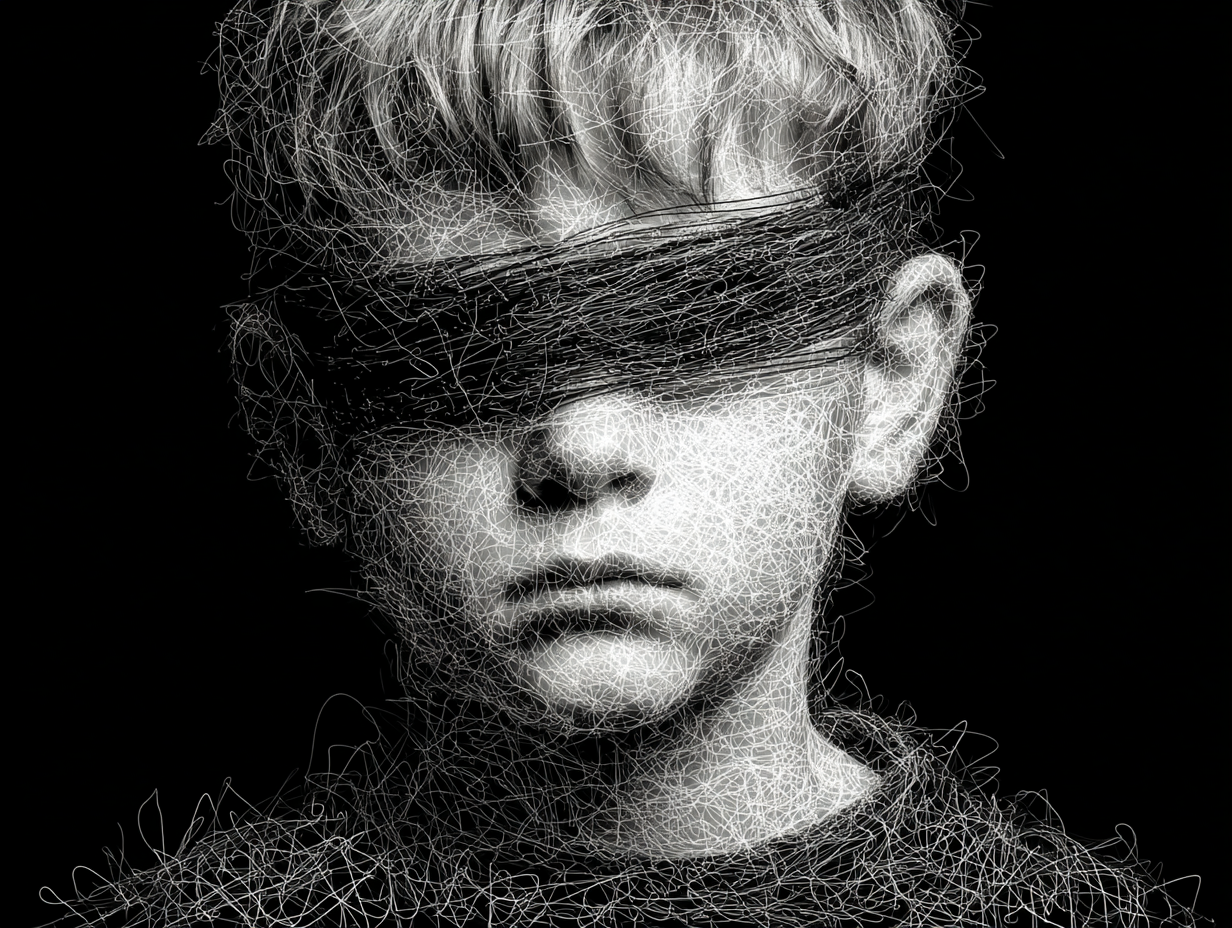
None of this guarantees violence. But it shapes vulnerability.
The Loneliness No One Sees
Overlaying these structural pressures is what public health officials now describe as an epidemic of loneliness. In 2023, the U.S. Surgeon General declared social isolation and loneliness a national public health crisis, citing research showing that chronic loneliness increases the risk of premature death at levels comparable to smoking 15 cigarettes per day (https://www.hhs.gov/sites/default/files/surgeon-general-social-connection-advisory.pdf). Among youth, CDC data show significant increases in persistent feelings of sadness and hopelessness over the past decade (https://www.cdc.gov/healthyyouth/data/yrbs/index.htm). Loneliness is not a soft variable. It alters stress hormones, immune function, and emotional regulation.
In those group home files, loneliness was everywhere. Boys who had never experienced consistent attachment. Girls who cycled through foster placements. Children who learned early that vulnerability was unsafe. When belonging collapses, identity forms around survival. Sometimes that survival strategy looks like aggression.
Adolescence: When Rejection Feels Existential
The adolescent brain intensifies this dynamic. The National Institute of Mental Health explains that during adolescence, the emotional centers of the brain are highly active, while the prefrontal cortex, responsible for impulse control and long-term planning, is still developing (https://www.nimh.nih.gov/health/publications/adolescent-brain). This developmental imbalance means heightened sensitivity to rejection and status threats. For a socially isolated teen, humiliation can feel existential.
Research by the U.S. Secret Service analyzing targeted school violence found that most perpetrators displayed warning behaviours before attacks, including social isolation, grievances, and leakage of intent (https://www.secretservice.gov/sites/default/files/reports/2020-07/Protecting_Americas_Schools.pdf). These were not sudden eruptions from nowhere. They were often the final chapter in prolonged narratives of alienation.
The Stories That Teach Violence as Redemption
Layered on top of this is cultural storytelling. Modern media frequently glorifies the solitary avenger – the lone warrior who reclaims dignity through violence. Franchises like John Wick, The Equalizer, Taxi Driver, Joker, and vigilante films such as Death Wish portray isolation, grievance, and lethal retaliation as coherent identity arcs. Television series like Breaking Bad and Dexter center morally alienated protagonists whose violence becomes a vehicle for asserting control or meaning. In music, certain strands of drill, gangster rap, and some hard rock and metal subcultures at times romanticize retaliation, dominance, and nihilistic defiance – lyrics that frame the world as hostile and violence as self-assertion. None of these works is simple propaganda for aggression; many are complex artistic commentaries on alienation. Yet they repeatedly reinforce a powerful archetype: the misunderstood individual, wronged by the world, who restores meaning through force.
The American Psychological Association has summarized research indicating that repeated exposure to violent media can contribute to desensitization and reinforce aggressive cognitive scripts in vulnerable individuals (https://www.apa.org/topics/video-games/violence-harmful-effects). The media does not create violent youth. But it can provide symbolic blueprints for those already saturated in grievance. For a disconnected adolescent searching for identity, the lone avenger narrative can feel coherent, even seductive. It offers clarity in a confusing world, power in a life marked by humiliation, and visibility in the face of invisibility.
When Safety Measures Mirror Internal Chaos
Meanwhile, schools themselves have changed. Active-shooter drills condition children to rehearse survival. Metal detectors signal the expectation of a threat. Armed officers communicate that danger is normal. While these measures may deter some incidents, they also subtly reshape the emotional climate. For a child already living in internal chaos, the external environment mirrors that chaos. The school no longer feels like a sanctuary. It feels like a checkpoint.
It is critical to say clearly that mental illness alone does not predict school shootings. The American Psychological Association emphasizes that the vast majority of youth with mental health conditions are not violent (https://www.apa.org/monitor/2022/01/school-shootings). The distinguishing variables are often grievance, chronic isolation, lack of adult intervention, and access to firearms.
Weapons as Amplifiers of Despair
And access matters. Research published in Pediatrics demonstrates that youth living in homes with firearms face significantly higher risks of firearm-related death (https://publications.aap.org/pediatrics/article/130/5/798/30748/Guns-in-the-Home-and-Risk-of-a-Violent-Death). Other high-income nations experience adolescent depression and alienation, but far fewer school shootings. Guns do not create despair. They convert it into irreversible consequence.
When I think back to that night in the group home office, flipping through file after file, what strikes me most is not inherent evil. It is accumulated disconnection. Broken attachment. Poverty. Unseen pain. A culture that prizes independence while neglecting interdependence.